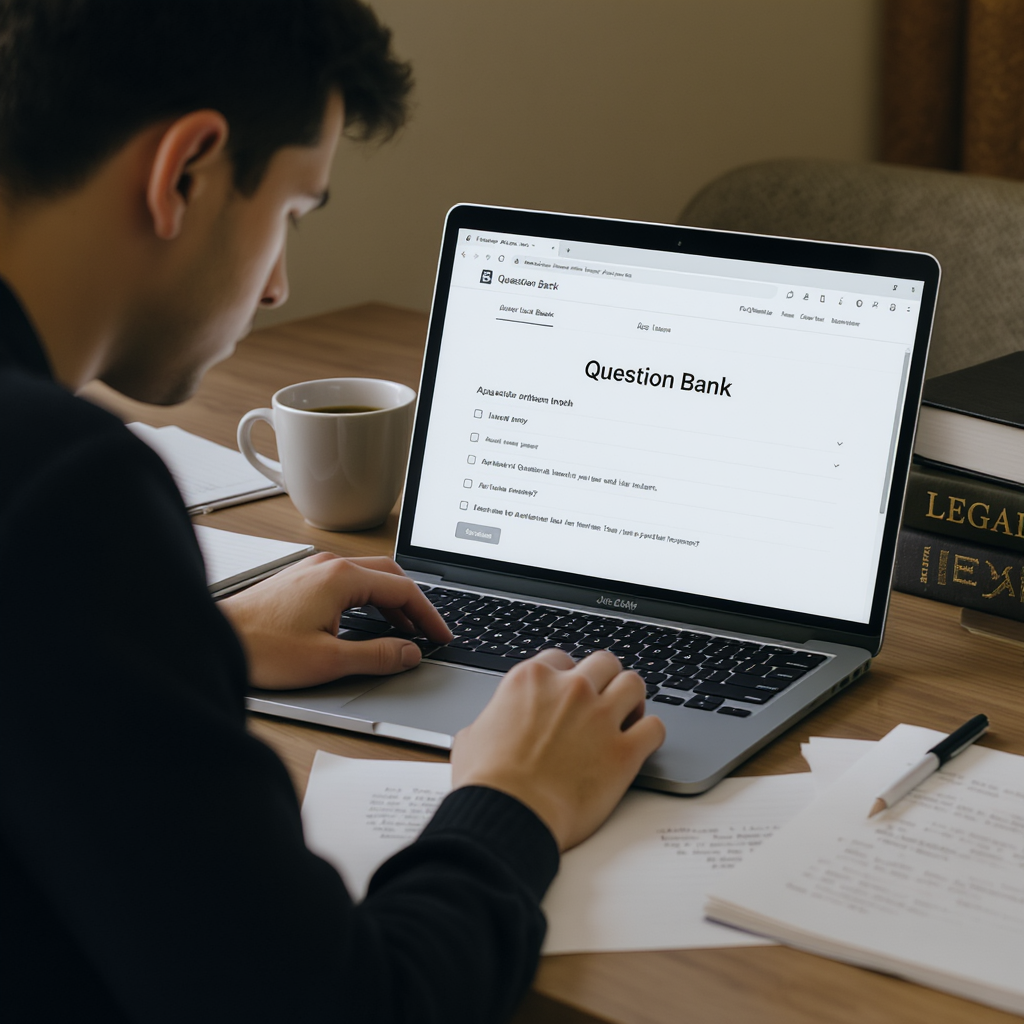
SQE1 Prep: Don’t Just Study Hard, Study Smart
The SQE1 exam isn’t just challenging—it’s a marathon of strategy and endurance. With 360 multiple-choice questions across two papers, the stakes are high. The pass rate hovers around 53%, meaning nearly half of all candidates don’t make the cut. But here’s the truth: many of those who fail didn’t stumble because they didn’t study enough; they stumbled because they didn’t study the right way.
If your preparation strategy revolves around reading textbooks cover to cover, passively reviewing notes, or cramming everything at the last minute, you’re likely wasting precious time. The secret to success lies in targeted study methods that maximize efficiency and focus on your weak areas. Let’s explore how you can save hours of prep time—and significantly boost your chances of passing.
Why Weak-Topic Drills Are Your Golden Ticket
Picture this scenario: you’ve always been comfortable with Tort Law because you aced it during your LLB. But now, faced with an SQE1 question about the nuances of vicarious liability, you’re stuck between two options. You take a stab at it—and get it wrong. What went wrong? Confidence in a subject doesn’t automatically translate to mastery. Familiarity can lull you into overlooking gaps in your knowledge.
Weak-topic drills are designed to close those gaps. They’re not about revisiting comfortable material you already know; they’re about zeroing in on the areas where you struggle most. Research from cognitive science shows that targeted practice is one of the most effective ways to improve exam performance. By focusing your time on weaker areas, you can make measurable progress without spinning your wheels on topics you’ve already mastered.
Take Sarah’s story, for example. Sarah started her SQE1 prep scoring just 40% on Business Law MCQs. Frustrated but determined, she spent two weeks drilling her weak topics—focusing on areas like directors’ duties and shareholder rights. By the end of those two weeks, her accuracy had jumped to 70%. What changed? Instead of spreading her study time evenly across all subjects, she concentrated on transforming her weakest area into a strength. This wasn’t about grinding out more hours; it was about studying smarter.
How to Identify Your Weak Areas
Before you can tackle your weaknesses, you need to know what they are. The SQE1 exam covers a vast syllabus split into two Functional Legal Knowledge (FLK) sections: FLK1 topics like Contract, Tort, and Business Law, and FLK2 topics like Criminal Law, Property Law, and Trusts. Pinpointing your weak areas starts with tracking your performance across these subjects.
One effective method is using analytics tools like SQE1Prep that break down your accuracy by topic. For instance, if your scores in Wills and Administration of Estates consistently fall below 60%, that’s a clear signal to focus more attention there. Armed with this data, you can prioritize your study time instead of spreading it thinly across all subjects.
Here’s a practical example:
- Scenario 1: You’re consistently scoring 85% in Contract Law but only 50% in Criminal Law. Instead of splitting your study time equally, dedicate extra hours to Criminal Law until your accuracy improves.
- Scenario 2: After reviewing your practice test results, you notice repeated mistakes in Property Law questions about equitable remedies. Use targeted MCQs and explanatory feedback to drill this concept until it sticks.
By consistently revisiting your weaker areas, you’ll not only improve your understanding but also build confidence going into the exam.
Why Active Recall Is a Game-Changer
If your current study routine involves highlighting textbooks or re-reading notes, you’re not alone—but you’re also not using the most effective strategy. Research has repeatedly shown that passive review methods like these feel productive but yield poor results. Active recall, on the other hand, is a proven technique that forces your brain to retrieve information, strengthening your memory and comprehension.
Here’s how you can integrate active recall into your SQE1 prep:
- Start Each Session with Practice Questions: Begin every study session by answering 10–15 multiple-choice questions. This primes your brain to engage actively with the material and helps you identify gaps in your knowledge early on.
- Analyze Your Mistakes: When you get a question wrong, don’t just glance at the correct answer and move on. Dig deeper. Understand why the right answer is correct and why the others are incorrect. This process reinforces your understanding and prevents repeat mistakes.
- Revisit Weak Topics: Let’s say ethics-related questions trip you up. Spend dedicated time reviewing the Solicitors Regulation Authority (SRA) Code of Conduct and drilling ethics-focused MCQs. Repetition is key to mastering challenging material.
Active recall isn’t about rote memorization; it’s about creating the mental connections that allow you to retrieve information quickly and accurately during the exam.
Building a Study Schedule That Works
One of the most common mistakes candidates make is cramming. The SQE1 syllabus is far too extensive for last-minute studying to be effective. Instead, focus on steady, consistent progress with a structured study schedule. Here’s a sample framework you can adapt based on your timeline:
A Week-by-Week SQE1 Study Plan:
- Weeks 1–2: Concentrate on FLK1 subjects such as Contract, Tort, and Business Law. Drill 30 MCQs daily and review your notes for context. Start identifying weak areas early.
- Weeks 3–4: Shift your focus to FLK2 subjects like Criminal Law, Property Law, and Trusts. Continue drilling 30 MCQs per day while tracking your accuracy rates across all topics.
- Weeks 5–6: Dedicate these weeks to weak-topic drills. Prioritize subjects where your accuracy falls below 60% and use targeted practice to improve.
- Week 7: Take two full-length practice tests (180 questions each). Simulate exam conditions to build stamina and refine your time management.
- Week 8: Review your weakest areas and focus on high-value topics like Ethics and procedural law.
This plan balances content review, active recall, and exam simulation, ensuring comprehensive preparation. Adjust it to fit your timeline, but keep the emphasis on steady improvement rather than cramming.
Don’t Skip Exam Simulations
The SQE1 isn’t just a test of knowledge—it’s a test of endurance. With 180 questions to answer in 4 hours, time management is critical. Practicing under timed conditions helps you build the stamina and pacing needed to perform well on exam day.
Using tools like SQE1Prep’s Exam Mode allows you to replicate the format and pressure of the real test. For example, if you find yourself spending too much time on question types like procedural law, simulations can help you develop strategies to work faster. This practice also helps you avoid the common pitfall of rushing through the final questions due to poor pacing.
Final Thoughts: Study Smarter, Not Longer
Passing the SQE1 isn’t about memorizing every detail in the syllabus—it’s about mastering the essentials and knowing how to apply them under pressure. Weak-topic drills, active recall, and exam simulation are your most powerful tools. By identifying your weakest areas and practicing with purpose, you can save hours of prep time while significantly boosting your score.
Remember, success on the SQE1 isn’t about how many hours you study; it’s about how effectively you use those hours. Focus on what matters, practice with intention, and walk into the exam room feeling confident and prepared.
Learn more at SQE1 Drills