SQE1 Prep on a Budget: The Reality
Let’s be honest: SQE1 prep isn’t cheap. With courses like BARBRI and ULaw costing up to £6,000, it’s no wonder so many self-funding candidates feel priced out. And while free SQE1 questions online seem like a lifeline, they often fall short. Why? Because most of them are outdated, overly simplified, or not aligned with the SRA syllabus.
So, what’s the alternative? Practicing smarter, not harder. And no, that doesn’t mean dumping £3,000 on a premium course. It means combining free resources with tools that offer more depth and adaptability. Let’s break this down into actionable steps and strategies to help you prep for SQE1 without breaking the bank.
The Free Question Trap: Why "Free" Isn’t Always Better
The internet is full of free SQE1 multiple-choice questions (MCQs). Reddit threads are packed with links to old LPC papers, amateur-made question sets, and even Kaplan-style PDFs. But here’s the catch: most of these resources are either too generic or so outdated they don’t reflect the current exam format.
Why Free Questions Can Be Misleading
The SQE1 exam format is single-best-answer MCQs designed to test applied knowledge, not just rote memorization. Many free resources focus on superficial recall, which doesn’t prepare you for the nuanced judgment calls required in the real exam. Preparing with outdated or poorly constructed questions is like preparing for a 2026 job interview with a guidebook from 2010—you’re not just wasting time; you’re actively reinforcing bad habits.
For example:
- Outdated format: Older LPC-style questions often test pure memorization rather than applied problem-solving.
- Non-alignment with the SRA syllabus: Many free resources don’t cover all the topics tested in SQE1, leaving you with blind spots.
When Free Questions Are Useful
That said, free questions aren’t entirely worthless. They can:
- Help you dip your toes in the water and get a sense of the question style.
- Provide a starting point to gauge your readiness.
- Allow you to identify if you’re completely unfamiliar with certain areas of law.
Platforms like SQE1Prep offer free access to 10 high-quality, syllabus-aligned MCQs. These types of free resources, when well-curated, can serve as a litmus test for where you stand. However, relying solely on free questions won’t get you over the line.
Breaking the Plateau: Why Fresh Questions Matter
The "200 Questions" Problem
Here’s a common scenario: You practice 200 MCQs, get 60% right, and feel like you’re improving. Then your score plateaus. What’s happening? You’ve memorized the questions instead of learning the underlying principles. This is a natural pitfall when you’re using static question banks that don’t change or adapt to your performance.
The Importance of Dynamic Question Banks
Dynamic question banks are designed to keep you engaged and learning, even after hundreds or thousands of practice questions. Here’s how they make the difference:
- Fresh material: Tools like SQE1Prep add ~100 new AI-generated questions daily, ensuring you’re always working with fresh material.
- Syllabus alignment: Every question is tied directly to specific SRA topics, so you’re practicing what matters.
- Adaptive difficulty: Some platforms adjust the difficulty of questions based on your performance, ensuring you’re always challenged without being overwhelmed.
By using a dynamic question bank, you avoid the trap of memorizing answers and instead focus on understanding the principles behind the questions. This approach builds both knowledge and confidence, which are critical for exam day.
Spotting (and Fixing) Weak Topics
The Challenge of Identifying Weak Spots
Most candidates don’t know their weak spots until it’s too late. The first time you realize you’re shaky on Solicitors Accounts shouldn’t be in the exam room. But how do you identify weak areas without shelling out for an expensive analytics tool?
Affordable Solutions for Weak Topic Detection
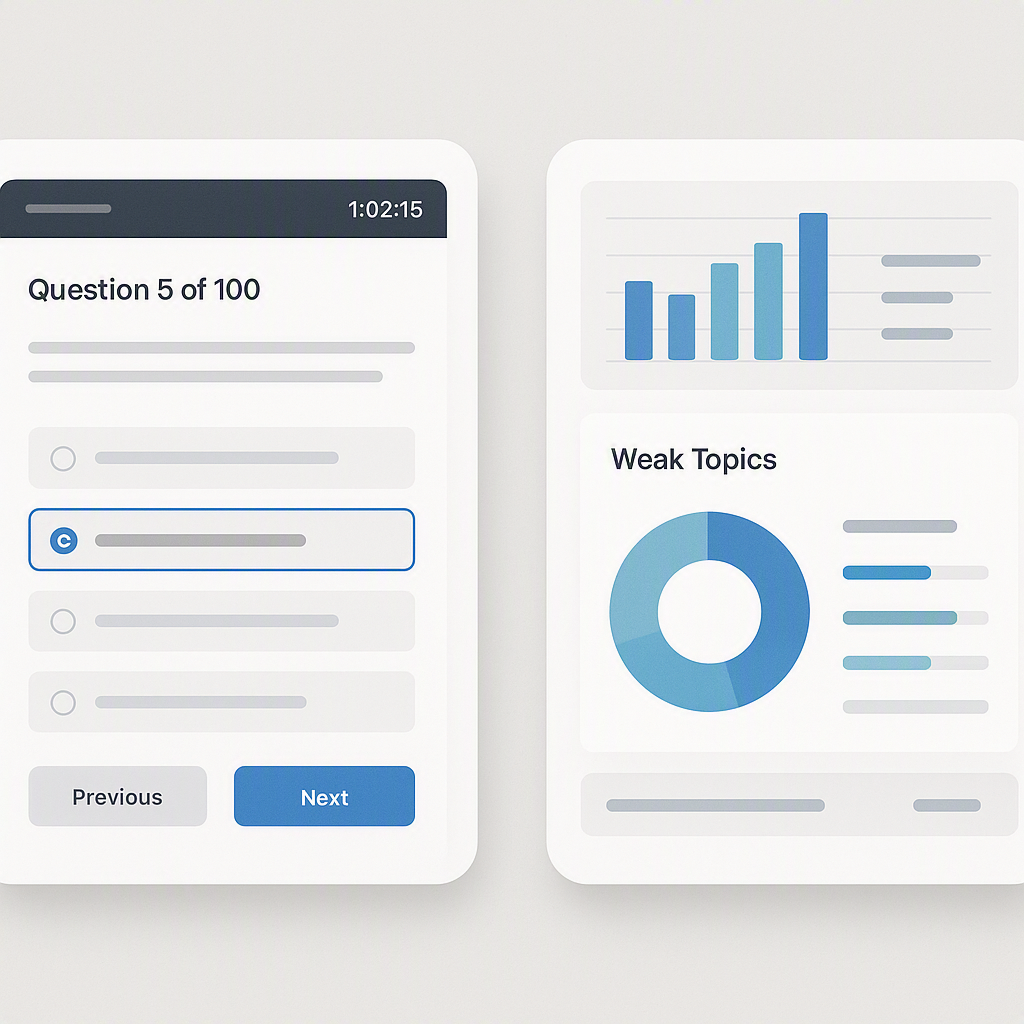
Platforms like SQE1Prep offer built-in weak-topic detection features that flag subjects where your accuracy drops below a threshold (e.g., 60%). Here’s how to make the most of this feature:
- Track your performance: Regularly review your accuracy rates across different topics.
- Prioritize weak areas: Focus your study sessions on flagged topics, using targeted drills to improve.
- Reassess regularly: As you improve, retest yourself on previously weak areas to ensure long-term retention.
For example, if you’re struggling with Contract Law questions, the system will highlight this and suggest targeted drills. This ensures you’re not just practicing aimlessly—you’re actively addressing the gaps that could cost you the exam.
Manual Method
If you’re using free resources without built-in analytics, you can still identify weak spots manually:
- Keep a spreadsheet to track your performance by topic.
- Use color coding to highlight areas where your accuracy is consistently low.
- Allocate more time to reviewing weak topics in your study plan.
Simulating the Real Exam
Why Simulation Matters
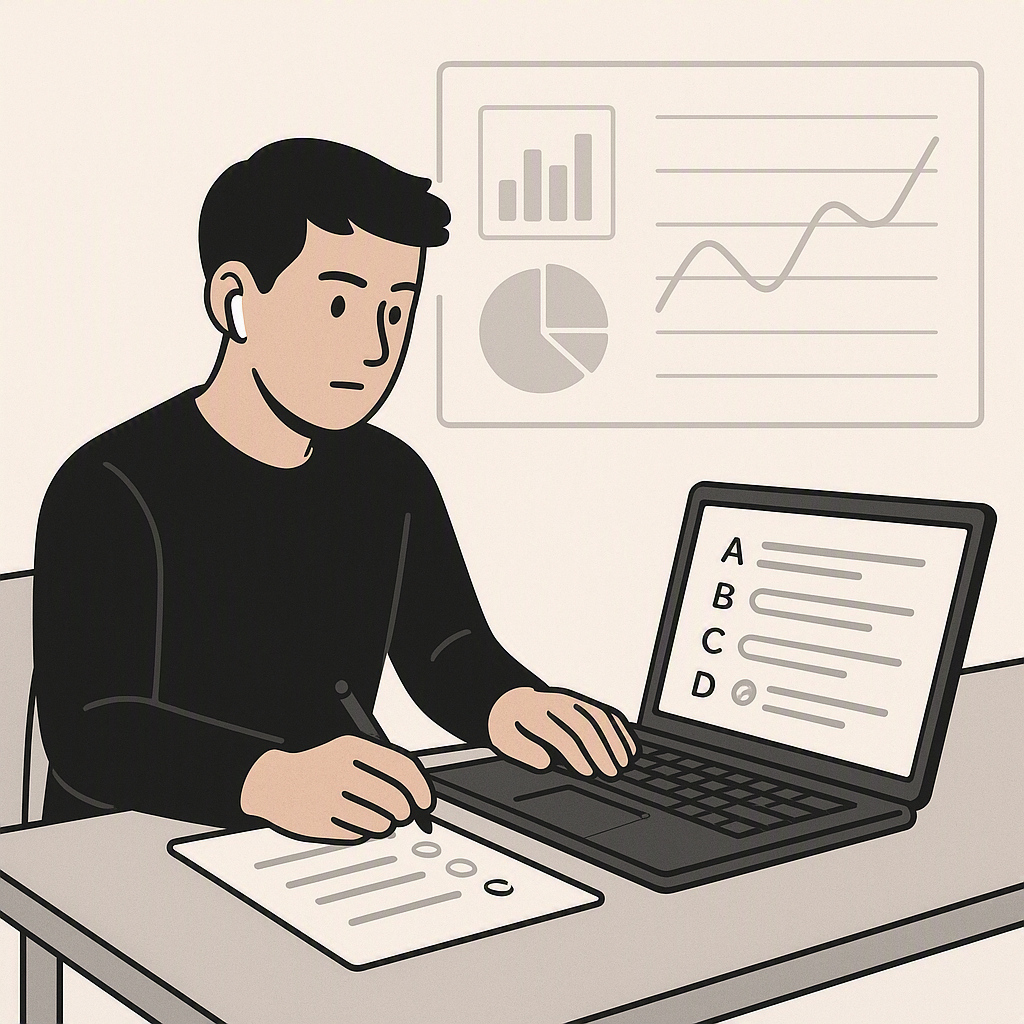
Practicing individual questions is one thing. Simulating the full exam is another. Here’s why it’s crucial:
- Stamina: The SQE1 exam is 180 questions per paper, with a strict time limit. You need to build mental endurance to avoid burnout halfway through.
- Time management: Simulations help you practice pacing, ensuring you don’t run out of time.
- Realistic conditions: Replicating exam conditions reduces anxiety and boosts confidence on the actual day.
Affordable Exam Simulations
Tools like SQE1Prep’s Exam Mode let you replicate the actual exam conditions at home. Here’s how to integrate simulations into your prep:
- Start small: Begin with shorter timed sessions to build your stamina.
- Work up to full exams: Gradually increase the length of your sessions until you can complete a full 180-question simulation.
- Analyze your performance: After each simulation, review your answers to identify patterns of mistakes.
Decision Framework: Choosing the Right Prep Tools
| Feature | Free Resources | Premium Courses (£3,000+) | Affordable Tools (e.g., SQE1Prep) |
|---|---|---|---|
| Cost | £0 | £3,000–£6,000 | £5/month |
| Question Quality | Varies | High | High |
| Syllabus Alignment | Often partial | Yes | Yes |
| Dynamic Question Bank | No | Sometimes | Yes |
| Weak Topic Detection | No | Yes | Yes |
| Exam Simulations | Rare | Yes | Yes |
FAQs
Q: Are free SQE1 questions worth it at all?
Absolutely, but only for initial practice. Think of them as a baseline, not the whole strategy. Use them to gauge your starting point, then move to dynamic, syllabus-aligned tools for real progress.
Q: How many questions should I aim to practice?
There’s no magic number, but variety is key. Repeating the same 200 questions won’t help. Aim for a platform that regularly updates its bank, like SQE1Prep.
Q: Can I focus on specific topics?
Yes, but only on certain platforms. SQE1Prep, for instance, lets you configure drills by subject and even question count. Free resources rarely offer this level of control.
Q: Is it possible to pass SQE1 without paying for prep?
Technically, yes. But the odds aren’t great if you’re relying solely on free resources. Combining free questions with affordable tools like SQE1Prep (£5/month) gives you a much better shot.
Q: How do I know if I’m ready for the exam?
Simulate the full exam under timed conditions. If you’re consistently scoring above the passing threshold (typically 55–60%), you’re likely ready.
Smarter Prep Starts Here
Free SQE1 questions are a great starting point, but they’re not enough to pass. If you’re serious about passing on your first attempt, you need tools that go beyond static PDFs. Platforms like SQE1Prep offer dynamic question banks, weak-topic detection, and realistic exam simulations—all for just £5/month.
Ready to practice smarter? Get started free →
Learn more at SQE1 Drills