Why 'C' Isn't the Magic Answer for SQE1 MCQs
We've all heard the myth: when in doubt, pick 'C.' It’s been passed around in exam halls like gospel. But let’s be clear — this is dangerous advice when it comes to SQE1. Why? Because SQE1’s single-best-answer format isn’t a guessing game. It’s a precision test. And relying on guesswork, especially something as random as 'C,' can tank your score.
Here’s what you need to know to avoid falling into this trap — and how tools like SQE1 Drills can help you build a smarter approach.
Understanding the Single-Best-Answer Format
The SQE1 multiple-choice questions (MCQs) are designed to test your practical application of legal principles, not just rote memorization. Each question has four options, but only one is the single-best answer. That’s important to grasp: the other three options aren’t random throwaways. They’re plausible distractors that require you to not only know the law but apply it correctly to the scenario.
Take this example:
Question: In which of the following scenarios does an equitable easement arise?
- (A) A written agreement grants a right of way over the servient land.
- (B) A verbal agreement is made, but no written agreement follows.
- (C) The right of way is exercised openly for 20 years without interruption.
- (D) The landowner expressly denies the right in writing.
You might think, "'C' seems detailed and fits the 20-year rule." But it’s a trap. The correct answer is (A), as it aligns with the legal requirement for a written agreement under the Law of Property Act 1925. The examiners are betting that you’ll skim the question, spot the 20-year mention, and jump to the wrong conclusion.
This is why guessing 'C' (or any default option) isn’t wise. Instead, you need to analyze the legal principle behind the question and apply it to the specific facts presented.
Actionable Takeaways:
- Understand the format: The SQE1 exam isn’t testing your ability to memorize facts; it’s about applying legal principles in specific scenarios.
- Recognize plausible distractors: Learn to differentiate between correct answers and those that sound almost right but are actually traps.
- Use structured practice tools: High-quality practice questions, like those offered by SQE1 Drills, can help you familiarize yourself with how examiners structure these questions.
How to Spot Distractors
Distractors are deliberately crafted to look like they could be right, and they’re an integral part of what makes SQE1 challenging. These incorrect but plausible options are meant to test your ability to differentiate between correct legal reasoning and common misconceptions.
Here are the most common types of distractors:
- Misapplied laws: The principle might be correct, but the specific scenario makes it inapplicable. For example, an answer might cite a valid rule, but it misses the conditions under which that rule applies.
- Half-true statements: These include part of a rule but omit a critical condition. For example, an answer might state that an agreement was "in writing" but leave out whether it was signed by all parties.
- Logical fallacies: These are options that seem plausible on the surface but don’t logically follow from the facts of the question. They prey on assumptions or common misunderstandings.
Identifying these distractors is a skill that requires practice and analysis. Simply reading up on the law isn’t enough; you need to apply it repeatedly in exam conditions.
Steps to Spot Distractors:
- Break down the question: Identify the legal principle being tested and the relevant facts.
- Eliminate incorrect answers: Look for options that contradict the law or don’t fit the facts. Even ruling out one or two options can significantly improve your odds.
- Beware of overconfidence: Don’t assume an answer is correct because it "looks detailed" or "sounds academic." Always tie it back to the legal principle.
This is where SQE1 Drills comes in. The platform’s AI-powered question bank is specifically designed to mimic how SQE1 examiners think. Each distractor is carefully constructed to test your understanding of the law, helping you recognize patterns and avoid common pitfalls. The AI even provides detailed explanations for why each answer is correct or incorrect, allowing you to learn from every mistake.
What to Do When You’re Stuck
Even with thorough preparation, some questions will inevitably stump you. Whether it’s a complex scenario or a topic you’re less familiar with, you’ll need a strategy for handling these tough moments. Blindly guessing isn’t the answer, but you also can’t afford to spend too much time agonizing over a single question.
Here’s a four-step method for tackling tricky questions:
-
Eliminate clearly wrong answers: Look for answers that directly contradict established legal principles or don’t fit the facts. If you can rule out even one or two options, you’ve improved your odds of guessing correctly.
-
Focus on the facts: Pay close attention to specific details in the question. Examiners often include subtle hints or phrasing that can guide you toward the correct answer. For example, words like "always," "never," or "only" can indicate an overly broad or overly narrow interpretation of the law.
-
Trust your preparation: If you’ve practiced enough, your instincts may already be tuned to spot the best answer. Go with your gut — but only if you’ve put in the work to build a solid knowledge base.
-
Make an educated guess: If you’re still unsure after analyzing the question, make your best guess and move on. Remember, there’s no negative marking on the SQE1, so leaving a question blank is a wasted opportunity.
How Weak-Topic Detection Helps
One of the most effective ways to improve your SQE1 performance is by identifying and addressing your weak areas. But how do you know which topics need the most attention? This is where weak-topic detection tools can be a game-changer.
Why Weak Topics Matter
Most candidates fail SQE1 not because they don’t know anything, but because they lose marks in specific areas where their knowledge is patchy. For example, you might feel confident in Land Law, but if you’re consistently scoring below 50% on easements, that weakness could cost you significant marks on exam day.
The Role of Analytics
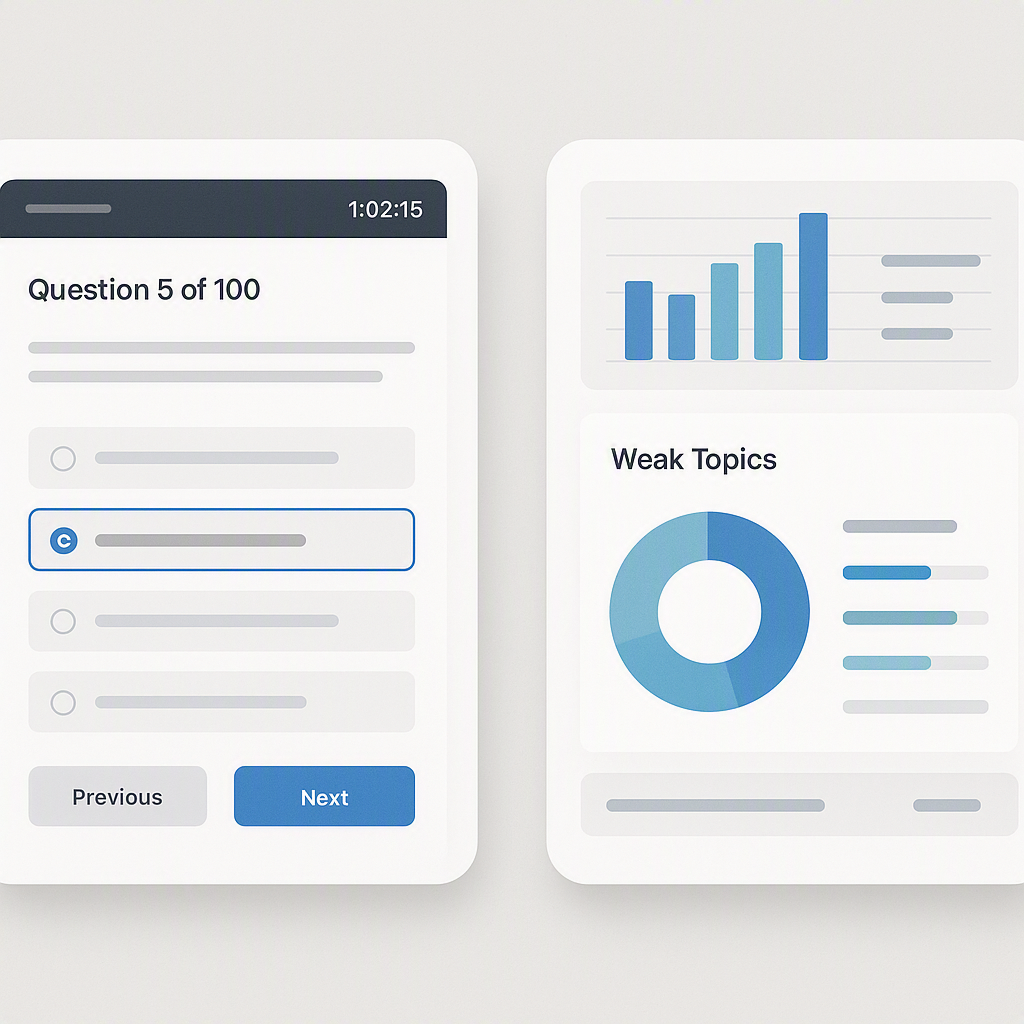
Platforms like SQE1 Drills make it easy to pinpoint your weak spots. Their analytics tools track your performance across different topics and flag areas where your accuracy is below average. This data-driven approach allows you to focus your revision where it will have the biggest impact.
The Myth of Patterns in MCQs
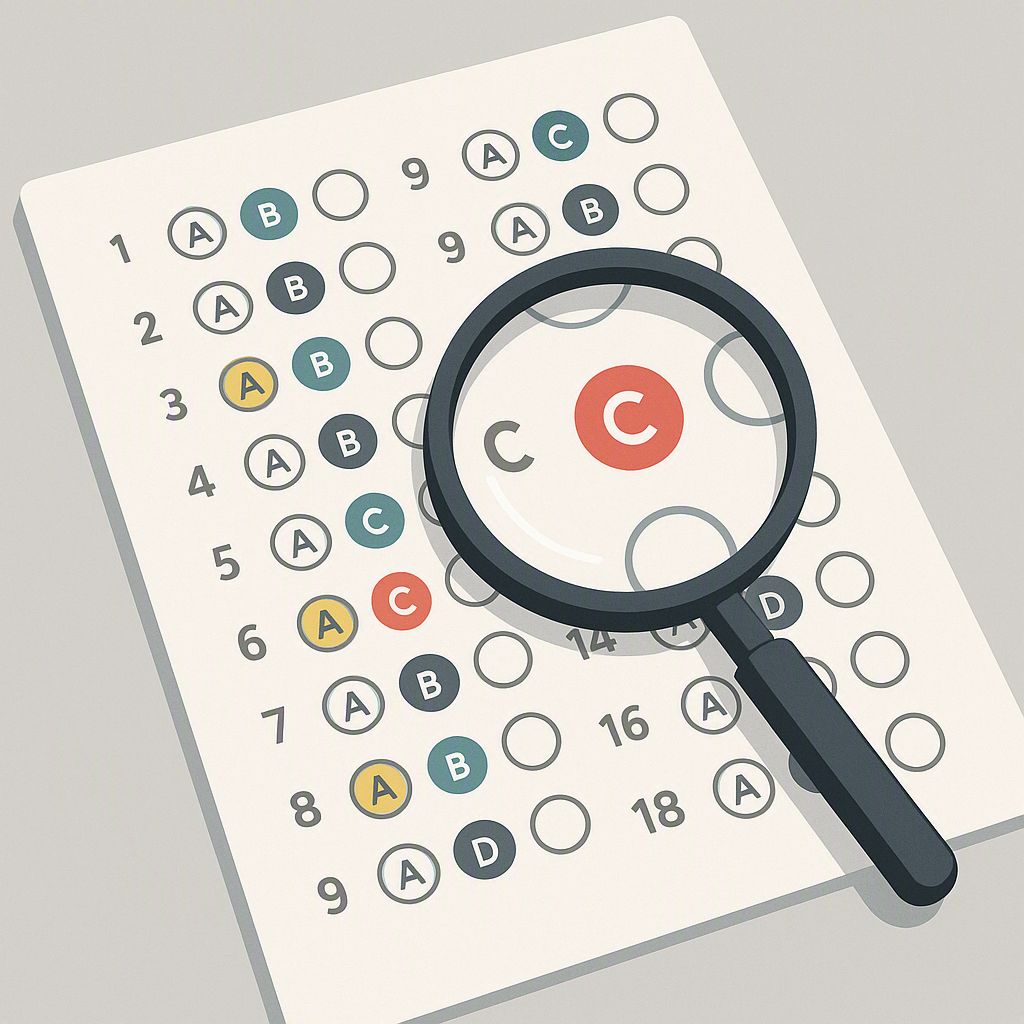
Another common belief is that examiners favor certain patterns, like 'C' appearing most often. Let’s bust this myth. Kaplan, the SQE1 exam provider, randomizes answer positions to ensure no pattern exists.
A 2020 analysis of Kaplan’s sample questions confirmed this: there’s no statistical preference for any letter. So, forget about gaming the system. Your only advantage comes from knowing the material cold.
Common Mistakes to Avoid
- Guessing without eliminating options. This is lazy and reduces your odds. Always try to rule out at least one wrong answer.
- Relying on patterns. Don’t waste time trying to spot trends in answer choices. They don’t exist.
- Ignoring weak topics. If you’re consistently bombing a subject, fix it. Weak areas don’t magically improve on exam day.
- Skimming questions. Read every word carefully. Examiners love to trip up candidates who rush.
FAQ
Q: Should I always answer every question, even if I’m guessing?
A: Yes. There’s no negative marking in SQE1, so a guess is better than leaving it blank. Just make it an educated guess.
Q: How can I stop falling for distractors?
A: Practice recognizing them. Platforms like SQE1 Drills explain why wrong answers are wrong, helping you build that skill.
Q: What’s the best way to manage time during the exam?
A: Use timed practice sessions. SQE1 Drills’ Exam Mode replicates real conditions, teaching you to pace yourself.
Conclusion
Guessing 'C' might work in a pub quiz, but it’s a risky move for SQE1. Success comes from understanding the material, practicing with realistic questions, and fixing your weak spots. If you’re ready to tackle SQE1 with confidence, SQE1 Drills can help. Start practicing smarter today. Get started free →
Learn more at SQE1 Drills