Are You About to Run Out of Practice Questions?
Most SQE1 candidates focus on studying the syllabus — contracts, torts, land law, and all the other topics. But they forget one critical thing: if you run out of fresh practice questions, your prep stalls. Why? Because repeating the same questions over and over doesn’t test your knowledge. It just tests your memory.
In this article, we’ll explore why running out of unique questions is a bigger problem than it seems, provide actionable strategies to avoid this issue, and answer common questions about practice question preparation.
The Problem: Limited Question Banks
Many SQE1 prep providers boast thousands of questions. But dig deeper. Often, those "thousands" include duplicates, poorly phrased scenarios, or questions that don’t align with the Solicitors Regulation Authority’s (SRA) testing schema. Worse, once you’ve answered them all, there’s nothing left except repeating what you’ve already seen. This kills active recall — the most effective way to learn.
Active recall forces you to retrieve information from memory, solidifying your understanding. Research backs this up: studies show retrieval practice improves retention by up to 50% compared to passive review methods like rereading notes (Source: Psychological Science).
The Hidden Downsides of Running Out of Questions
- False Mastery: Answering the same questions on repeat creates a dangerous illusion of competence. You might remember the answer, but do you truly understand the underlying legal principle?
- Limited Exam Simulation: SQE1 exams are designed to test application under pressure, not rote memorization. Static question banks fail to replicate this dynamic challenge.
- Missed Edge Cases: The SQE1 syllabus spans topics like Business Law, Professional Conduct, and Criminal Law. Static question banks often fail to capture more nuanced, less common exam scenarios.
Example: A Static Bank’s Shortcomings
Take a tort law question from a static bank: "Is a manufacturer liable under the Consumer Protection Act 1987 for a defective product?" You might memorize the correct answer (yes, under certain conditions), but if the exam twists the fact pattern to include contributory negligence or an international element, you may struggle to adapt your knowledge.
A Real Fix: AI-Powered Question Generation
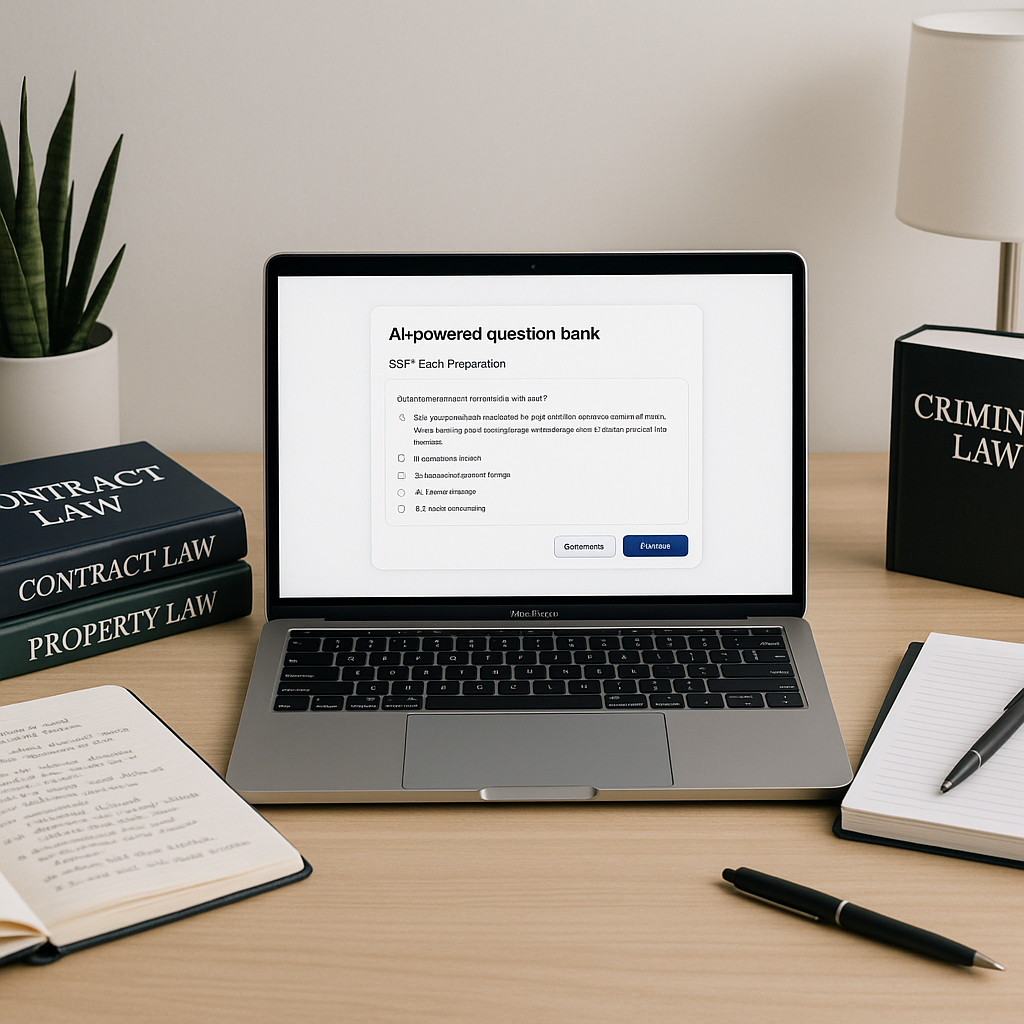
This is where platforms like SQE1Prep change the game. Instead of static question banks that eventually run dry, the platform generates ~100 new validated MCQs daily. These AI-powered scenarios are grounded in SRA specifications, ensuring every question matches the exam’s single-best-answer format.
How AI-Generated Questions Work
AI tools analyze the SQE1 syllabus, legal precedents, and exam patterns to create high-quality, unique questions. Each question is vetted against the SRA’s specifications to ensure accuracy and relevance. For example:
- Static Bank Question: "What is the test for negligence in tort law?"
- AI-Generated Question: "A plaintiff suffers an injury after slipping on a wet floor in a supermarket. The supermarket claims they placed adequate warning signs. Evaluate whether the supermarket is liable under the Occupiers’ Liability Act 1957."
Notice how the latter forces you to apply legal principles to a nuanced scenario — exactly what the SQE1 exam demands.
Why Fresh Questions Matter
1. Avoiding False Confidence
If you've memorized the answers to old questions, you might think you've mastered a topic. But put a twist on the scenario, and suddenly your understanding crumbles. Fresh questions expose gaps in your knowledge.
2. Simulating Exam Conditions
SQE1 isn’t just about knowing the law. It’s about applying it under timed conditions. Fresh, unpredictable questions mimic the exam environment better than stale, predictable ones.
3. Covering Edge Cases
The SQE1 syllabus is vast. AI-generated questions expand the scope of scenarios, helping you prepare for curveballs. For instance, how many static banks include nuanced Professional Conduct questions about conflicts of interest in small law firms? Likely not many.
Case Study: A Candidate Who Nearly Failed
Take Priya, a GDL graduate. She spent months working through her prep provider’s question bank. By exam day, she felt confident because she’d answered every single question twice. But on the actual SQE1 exam, Priya faced unfamiliar twists — nuances in property law and ethics she hadn’t seen before. Her confidence evaporated, and she barely passed FLK2.
Afterward, Priya switched to SQE1Prep. With a constantly expanding question bank, she drilled weak topics using fresh material daily. By her SQE2 attempt, she was scoring over 80% in mock exams.
What We Can Learn from Priya
- Static Banks Are Limited: Even high scorers risk failure if they don’t prepare for novel scenarios.
- Fresh Material Builds Confidence: Priya’s switch to fresh questions helped her tackle curveballs on exam day.
How to Avoid This Mistake
1. Audit Your Current Question Bank
- How many unique, high-quality MCQs do you have access to?
- Are they validated against the SRA schema?
- Do they cover the full syllabus, including niche topics like EU Law or Professional Conduct?
2. Track Your Weak Topics
Many candidates waste time drilling topics they’ve already mastered. Instead, use analytics tools to identify your weakest areas. Platforms like SQE1Prep offer real-time insights, allowing you to focus your efforts where they’re needed most.
3. Prioritize Fresh Questions
Don’t settle for static material. Look for tools that regularly update their question banks, like AI-powered platforms. If your current provider doesn’t offer this, consider supplementing your prep with a dynamic solution.
FAQ
Q1: Isn’t repeating questions still useful?
A: To a point, yes. Repetition reinforces memory. But for SQE1, you'll face unseen scenarios. Memorization won’t save you — understanding the principles will.
Q2: How many practice questions do I need?
A: More than you think. The SQE1 syllabus is vast, and the exam tests application, not rote knowledge. Aim for at least 500 unique questions across all syllabus areas before feeling confident.
Q3: What’s the advantage of AI-generated questions?
A: They’re tailored to the exam format, constantly updated, and eliminate duplicates. Plus, they help you prepare for edge cases you might not find in static banks.
Q4: Can I rely on free resources alone?
A: Free resources often lack depth and alignment with the SRA’s testing schema. While they’re a good starting point, investing in a high-quality, dynamic question bank is essential for SQE1 success.
Q5: How do I know if a question bank is high-quality?
A: Look for:
- Validation against the SQE1 syllabus
- Regular updates with new questions
- Coverage of all syllabus topics
- Features like analytics and weak topic tracking
Comparison Table: Static vs. AI-Powered Question Banks
| Feature | Static Question Banks | AI-Powered Question Banks |
|---|---|---|
| Question Quantity | Limited, often includes duplicates | Unlimited and always expanding |
| Question Quality | May include outdated or poorly phrased questions | Aligned with SRA specs and current exam trends |
| Adaptability | Fixed, cannot adapt to user progress | Dynamic, adjusts to user performance |
| Edge Case Coverage | Limited | High |
| Exam Simulation | Moderate | High |
| Cost | Often cheaper | Higher upfront cost, but better value |
Final Thoughts
Running out of practice questions is a bigger problem than most candidates realize. Don’t let it derail your prep. Platforms like SQE1Prep ensure you always have fresh material to drill, keeping your revision sharp and focused.
Learn more at SQE1 Drills