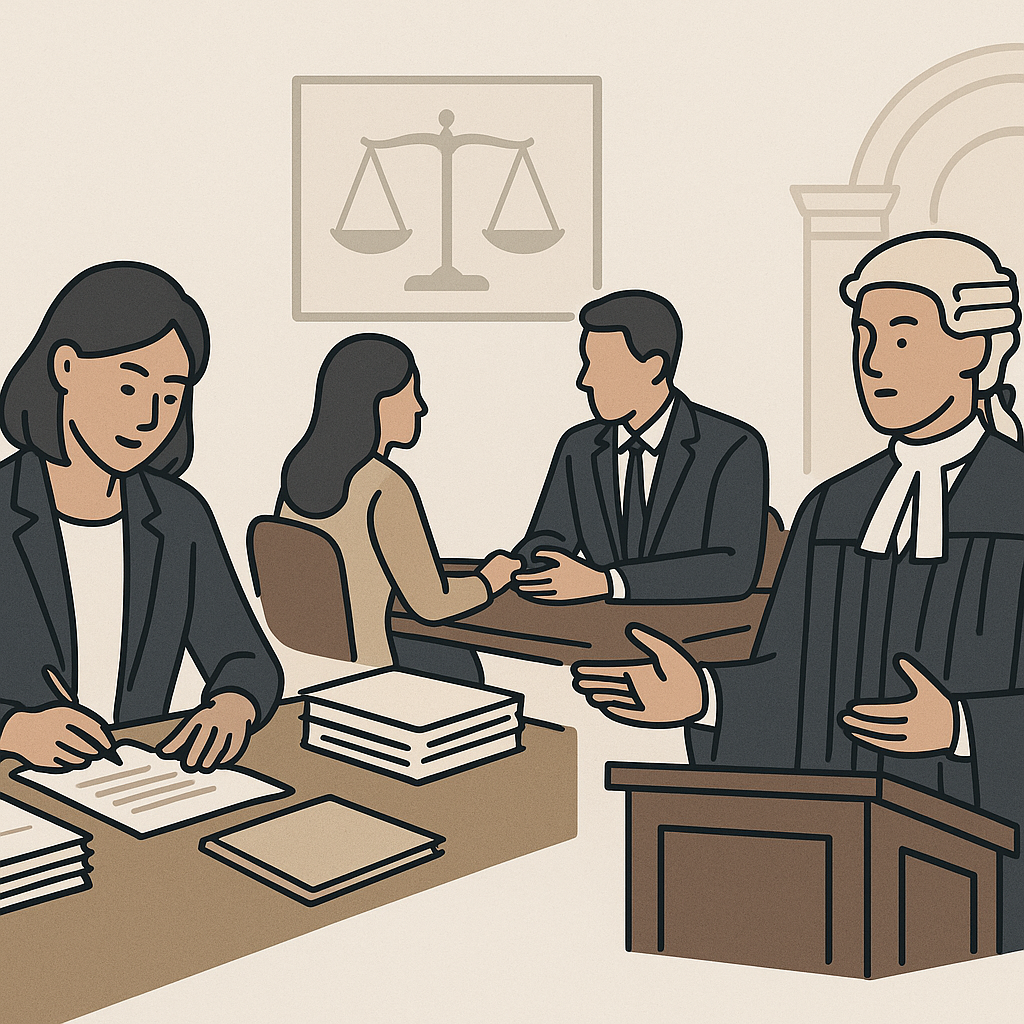
Are Paralegals Lawyers in the UK?
Short answer: no, paralegals are not lawyers. But they’re often an essential step toward becoming one. Paralegals work in legal environments, handle case files, draft documents, and liaise with clients—but they don’t hold the qualifications to act as solicitors or barristers. The distinction matters, especially if you’re planning to transition from being a paralegal to qualifying as a solicitor via the SQE1 route.
What Does a Paralegal Do?
Paralegals provide legal support, but their responsibilities depend on where they work. In small firms, they might handle everything from filing court documents to preparing bundles. In larger firms, the work is more specialized—think document review, research, and administrative tasks. While the role is critical, paralegals don’t have the authority to give legal advice or represent clients.
How Do Paralegals Become Solicitors?
The pathway has changed dramatically with the introduction of the Solicitors Qualifying Examination (SQE). Previously, you’d need the Legal Practice Course (LPC) and a training contract. Now, paralegals can qualify as solicitors by passing SQE1 and SQE2 and completing two years of Qualifying Work Experience (QWE). This change makes the solicitor qualification more accessible—but it’s still challenging.
Where SQE1 Fits In
Passing SQE1 is the first major hurdle. It tests your knowledge of legal concepts in two parts: FLK1 and FLK2. These cover everything from criminal law to business law. For many paralegals, especially those juggling work and study, preparing for SQE1 can feel overwhelming. That’s where targeted tools like SQE1Prep come in.
The platform offers affordable, AI-powered practice drills that pinpoint your weak topics. For example, if you struggle in Land Law, SQE1Prep’s analytics can help you focus your revision. This kind of feedback is essential for paralegals balancing full-time jobs with exam prep.
Why Paralegals Choose the SQE Route
- Cost: Traditional LPC routes are significantly more expensive. Paralegals often self-fund, making SQE’s affordability a game-changer.
- Flexibility: You can sit SQE1 while working full-time, unlike the time-intensive LPC.
- Recognition of Experience: QWE allows paralegals to count their existing work experience toward solicitor qualification, eliminating the need for a formal training contract.
What SQE1 Tests
The SQE1 exam focuses entirely on multiple-choice questions in the single-best-answer format. For paralegals unfamiliar with MCQs, this can be tricky. Most struggle with overthinking or second-guessing answers. SQE1Prep addresses this by offering instant feedback modes, explaining why the correct answer is right and why distractors are wrong. This builds confidence and accuracy over time.
Common Mistakes Paralegals Make
- Underestimating the Exam: Many paralegals assume their work experience will carry them through. It won’t. SQE1 is a rigorous test of academic knowledge.
- Skipping Exam Simulations: Practicing under timed conditions matters. SQE1Prep’s exam mode replicates the 180-question papers, helping candidates get comfortable with the format.
- Ignoring Weak Areas: Revising everything equally wastes time. Use tools like SQE1Prep to identify and drill weaker topics.
FAQ
Q: Can paralegals give legal advice?
A: No, only qualified solicitors or barristers can give legal advice.
Q: How long does it take to qualify via SQE?
A: It depends on your pace and circumstances. The time required varies for each individual.
Q: Is SQE1 harder than LPC?
A: It’s different. SQE1 focuses on breadth via MCQs, while LPC exams are essay-based. Both require serious preparation.
Q: Can I count paralegal work as QWE?
A: Yes, if your supervisor signs off that your work meets SRA requirements.
Ready to Start?
If you’re a paralegal aiming to qualify as a solicitor, SQE1Prep can help you tackle SQE1 without breaking the bank. Get started free →
For a deeper dive into affordable SQE1 prep strategies, check out Affordable SQE1 Prep for Self-Funded Candidates.
Learn more at SQE1 Drills