The One Thing You’re Getting Wrong About SQE1 Questions
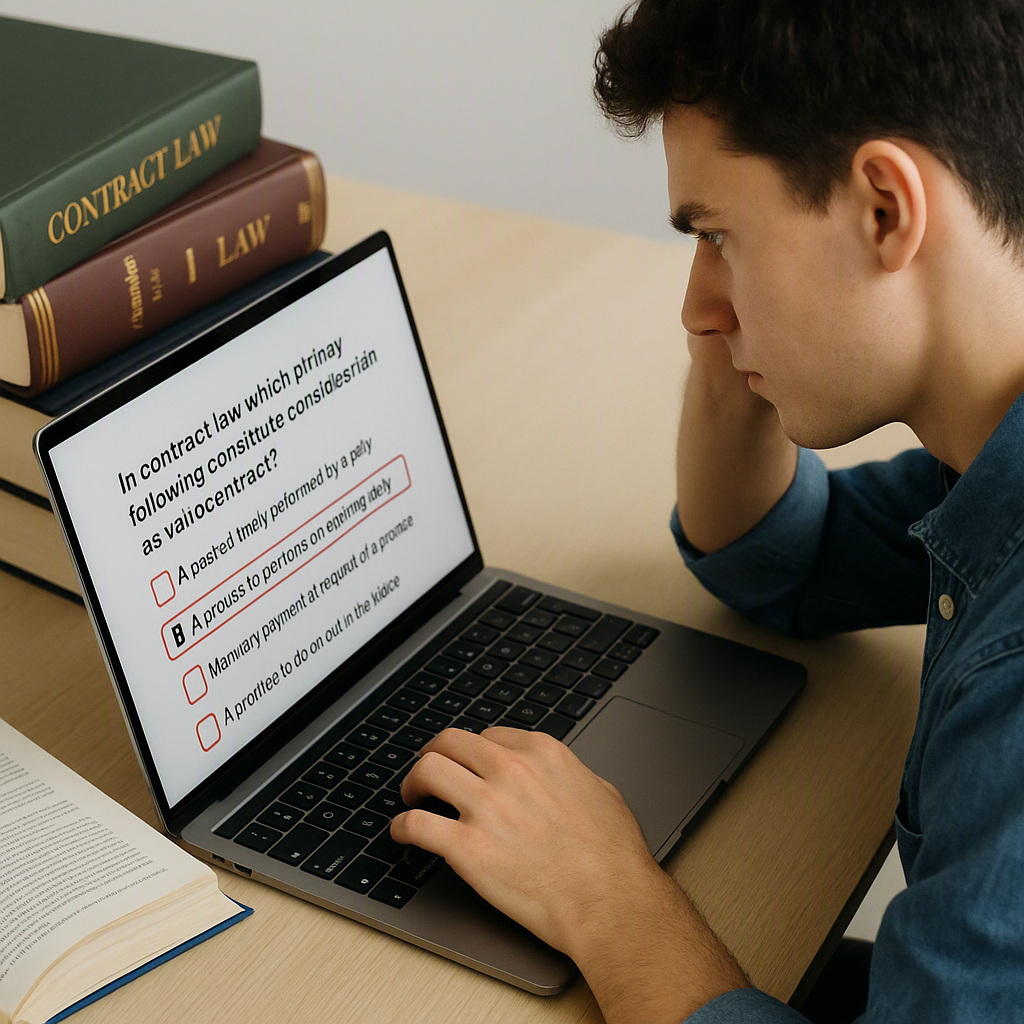
Let’s be honest: most of us think we’re pretty good at eliminating wrong answers. After all, you can usually spot the obviously incorrect ones, right? But here’s the thing—SQE1 isn’t like your average multiple-choice test. Those distractors (the wrong options) are there to mess with you. And they’re very good at it.
In fact, I used to think the same way. I’d read the question, knock out the silly answers, and then go with my gut on the rest. It worked in university exams. But SQE1? Different story. After a few practice drills, I realized I was falling for the traps and second-guessing myself. Sound familiar?
Why SQE1’s Distractors Are Brutal
SQE1 isn’t just testing your ability to memorize facts; it’s testing your ability to apply legal principles precisely. That’s why the examiners craft distractors to look incredibly tempting. They’re not throwing random wrong answers at you. Instead, those options are designed to look correct but include small, subtle errors that exploit common misunderstandings.
How Distractors Work
Distractors in SQE1 use the following tactics:
- Near-Misses: These answers are almost correct but feature a minor error that throws off candidates who haven’t read carefully. For example, a question might hinge on whether a lease can be terminated by notice, and the distractor will misstate the notice period.
- Familiar Traps: Some answers leverage common misconceptions. Imagine a question about adverse possession: a distractor might incorrectly state the required time period is 10 years instead of 12 years, knowing many candidates will default to the wrong assumption.
- Overcomplication: Some distractors introduce irrelevant legal jargon or details, baiting candidates into overthinking and second-guessing their initial instincts.
Take Land Law as an example. A question might ask about easements and the distinction between ‘dominant tenement’ and ‘servient tenement.’ A distractor could flip the two terms, banking on the fact that candidates rushing through the question won’t notice. If you skim and miss the nuance, you’ll fall into the trap.
The Impact on Pass Rates
The numbers don’t lie. According to the Solicitors Regulation Authority (SRA), the SQE1 pass rate hovers around 53%. That means nearly half of candidates fail. A significant reason for this is falling for distractors, alongside poor time management and the inability to apply legal principles under pressure.
What Changed My Approach
Here’s where I went wrong for far too long: I thought I could rely on my instincts. I believed that if I studied hard enough, I’d just “know” the right answer. Wrong. What changed my perspective was analyzing my drill data.
Lesson Learned from Practice Questions
When I started using SQE1 Drills, I noticed clear patterns in my mistakes. For instance, I consistently performed well in Business Law but struggled with Wills & Administration. Why? Not because I didn’t understand the material, but because I failed to catch the subtle differences in question wording. I was rushing through and second-guessing myself.
One question I vividly remember dealt with the priority of beneficiaries under insolvent estates. The correct answer required knowing the exact order of debts under the Insolvency Act 1986. Despite knowing the order, I picked the wrong answer because I didn’t take the time to carefully read the distractors.
How Targeted Drills Fix This
The good news is that this isn’t an intelligence problem—it’s a practice problem. Most candidates don’t fail because they lack legal knowledge; they fail because they don’t practice smart.
Actionable Steps to Fix Mistakes:
-
Identify Weak Topics: Use platforms like SQE1 Drills to pinpoint your weakest areas. This is done by analyzing your accuracy rates across topics. For instance, if your score is under 60% for Criminal Law questions, that’s your cue to focus.
-
Drill Repeatedly: Targeted repetition is key. For weak areas, aim to complete at least 100 questions specifically focused on that topic until your accuracy improves significantly.
-
Analyze Patterns in Distractors: After every practice session, review your mistakes thoroughly. Make notes on the types of tricks distractors are using against you. Are you falling for near-misses or overcomplicated answers?
-
Study Exceptions: Many distractors test exceptions to general rules. For example, a question might ask about a legal principle, but the correct answer involves an exception. Familiarize yourself with these nuances.
Example: Applying Targeted Drills
Let’s say you’re struggling with Contract Law questions about frustration. Instead of broadly studying the topic, focus on MCQs testing specific scenarios, such as when frustration applies to construction delays. After 50-100 targeted questions, you’ll start spotting patterns in how distractors exploit common misunderstandings.
Why Exam Simulations Matter
Another game-changer is full exam simulations. SQE1 Drills includes an Exam Mode that replicates the real test environment: 180 questions, timed, no pauses. This is vital for building stamina and learning time management.
Benefits of Exam Simulations:
-
Time Allocation: SQE1 questions demand balance. You need to allocate enough time to read carefully but not waste time obsessing over tough questions. Simulations teach you to move on when stuck.
-
Mental Stamina: Answering 180 questions in one sitting is mentally draining. Practicing simulations helps you build endurance and prevents burnout mid-exam.
-
Realistic Feedback: Simulations reveal whether your pacing is realistic. For example, if you consistently run out of time during Paper 2, you’ll know to adjust your speed.
FAQs
Q: How do I know if I’m falling for distractors? A: Review your practice question explanations. If you notice a pattern—such as consistently picking second-best answers or misreading exceptions—you’re likely falling for distractors. Flag these types of mistakes and focus on improving.
Q: How many practice questions should I complete before the exam? A: Aim for at least 600-800 questions. The SQE1 exam tests breadth and depth, so volume matters. Platforms like SQE1 Drills ensure you have access to fresh, high-quality questions.
Q: Should I spend more time reading textbooks? A: No. While textbooks are useful for foundational knowledge, SQE1 is about application. Active recall through multiple-choice questions is far more effective for exam prep.
Q: How can I stop second-guessing myself on questions? A: Build confidence through practice. The more you drill, the better you’ll recognize patterns in distractors. Additionally, stick to your first answer unless you’re certain you misread the question.
Q: Is it worth investing in paid prep tools like SQE1 Drills? A: Absolutely. Paid tools often provide curated, exam-specific content that’s tailored to SQE1’s format. Free resources can be helpful but may lack the depth needed to tackle tricky distractors.
Decision Framework: How to Approach SQE1 Preparation
| Factor | Strategy | Why It Matters |
|---|---|---|
| Weak Topics | Focus on targeted drills | Fixes gaps in knowledge and traps |
| Time Management | Use timed exam simulations | Builds pacing and stamina |
| Distractor Skills | Analyze mistakes and study exceptions | Avoids falling for common traps |
| Practice Volume | Complete at least 600 questions | Ensures breadth of preparation |
| Confidence | Stick to your first answer unless misread | Reduces second-guessing |
Final Thought
If you want to pass SQE1, stop relying on gut instinct. Distractors are designed to exploit rushed decisions and common misunderstandings. The solution? Smart, targeted practice. Use tools that identify your weak areas and simulate the exam environment.
For a deeper dive into strategies, check out What is the best strategy for taking MCQs?.
If you’re tired of guessing, practice smarter with SQE1 Drills. Get started free →
Learn more at SQE1 Drills