How to Eliminate Wrong Answers in SQE1
We’ve all been there. You stare at an SQE1 multiple-choice question, convinced you can spot the right answer. But somehow, the distractors pull you in, and you end up second-guessing yourself. It’s frustrating—and costly.
Here’s the reality: SQE1 isn’t designed to be easy. The Solicitors Regulation Authority (SRA) includes distractors that look plausible but are strategically wrong. If you don’t know how to eliminate them, your chances of passing decrease significantly.
How Distractors Work Against You
Distractors are the wrong answer choices in multiple-choice questions. They’re not random. They’re carefully crafted to look right unless you know the underlying legal principle. For example:
- Outdated law: A distractor might reference case law that’s been overturned.
- Misleading wording: Some options twist the language just enough to confuse you.
- Partial accuracy: Others might include part of the correct concept but miss a critical detail.
In SQE1, these tricks are everywhere. Guessing doesn’t work because distractors exploit uncertainty. If you don’t drill with actual SQE-style questions, you won’t learn to spot these patterns.
Active Recall: The Secret Weapon
Here’s what works: active recall. This is the process of retrieving knowledge from memory, rather than passively rereading notes or textbooks. Research consistently shows that active recall improves retention compared to passive study methods.
To apply this to SQE1, use targeted drills. Practice eliminating distractors in real time and review explanations for why each answer is right or wrong. This helps reinforce your understanding of key principles and patterns.
Why Exam Simulations Matter
Practicing under exam conditions is essential. SQE1 has strict time limits—180 questions per paper, with roughly 1 minute per question. If you’re spending too much time on a single question, you risk running out of time.
Exam simulations help you build the stamina and pacing you need. They replicate the real SQE1 timed format, forcing you to answer under pressure and refine your time management skills.
Illustrative Example: Eliminating Wrong Answers
Let’s break down a sample SQE1 question:
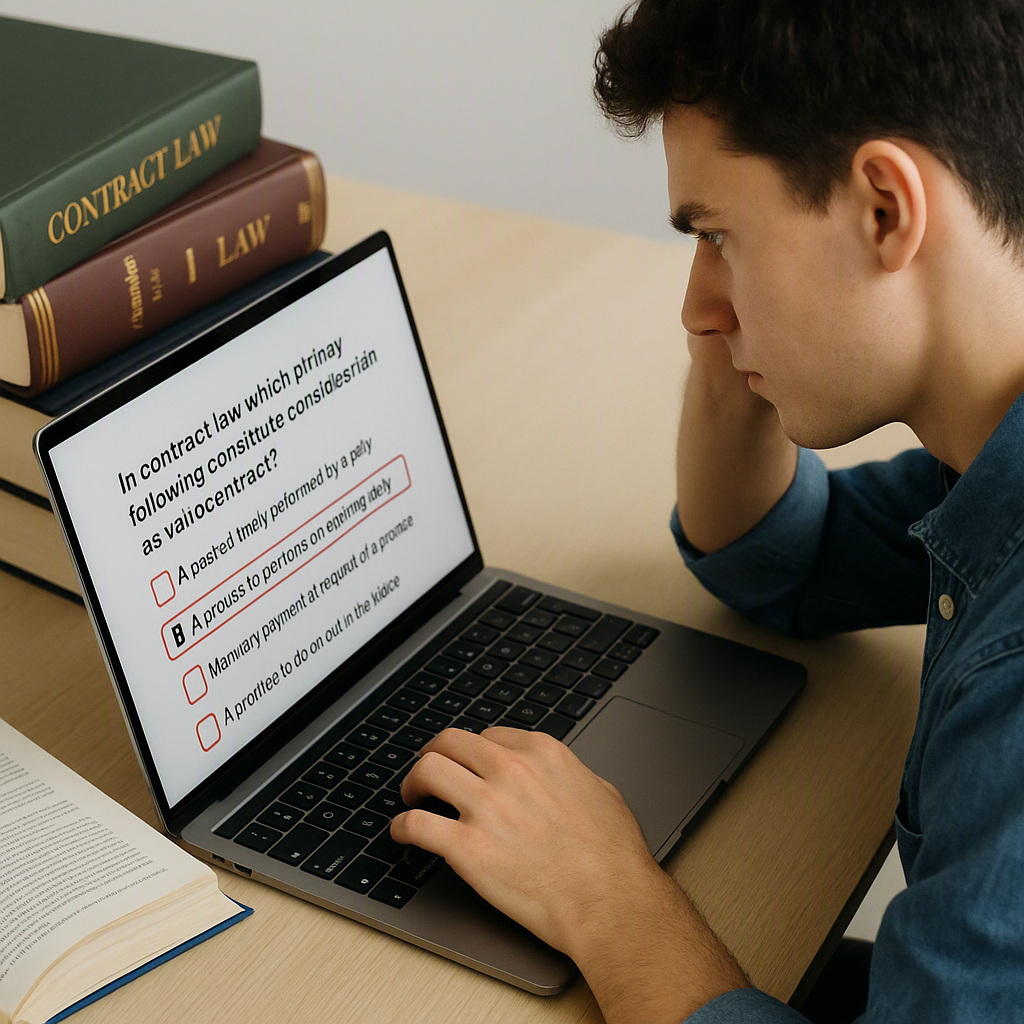
Question: Which of the following is a valid contract under English law?
- A. An oral agreement for the sale of land.
- B. A written agreement lacking consideration.
- C. A contract made under duress.
- D. A written contract with consideration.
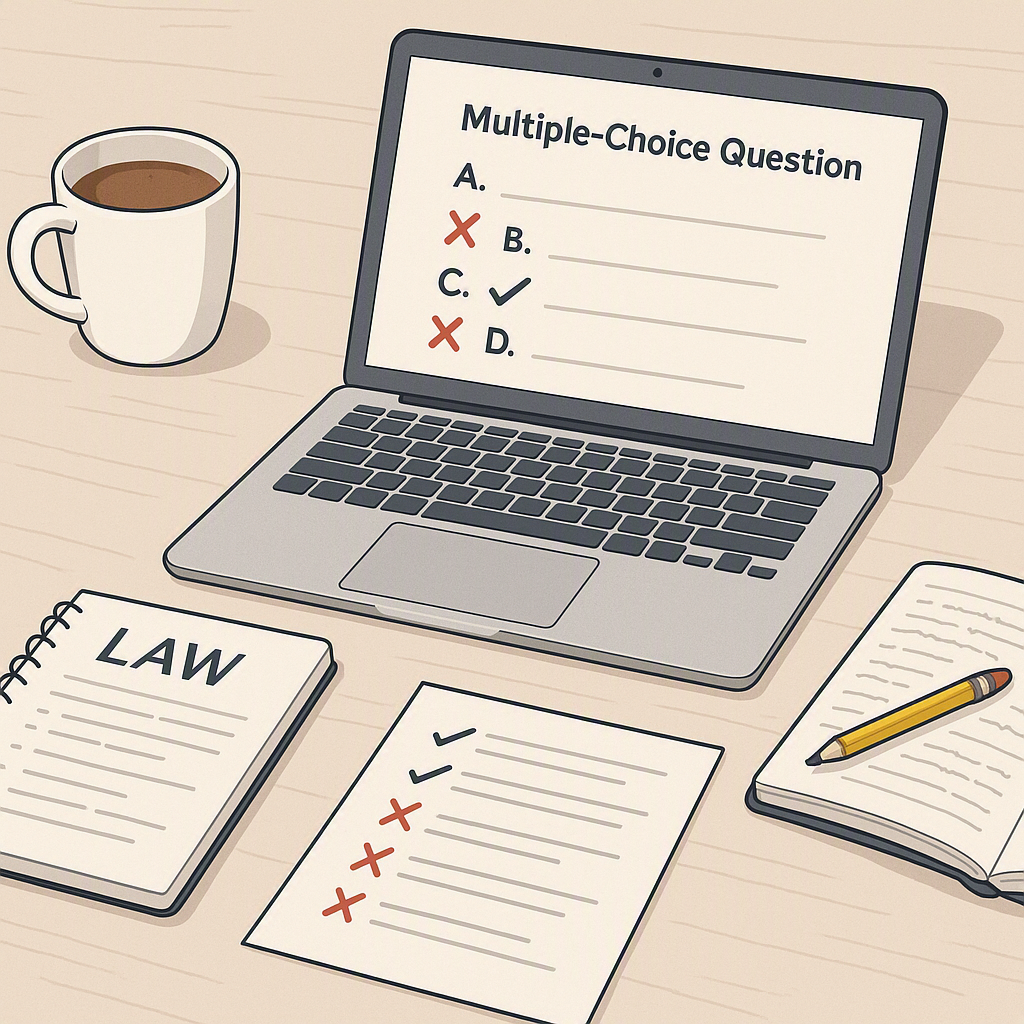
Analysis:
- A: Incorrect. Contracts for the sale of land must be in writing.
- B: Incorrect. Consideration is a required element for validity.
- C: Incorrect. Duress invalidates consent, making the contract voidable.
- D: Correct. A written contract with consideration meets the requirements for validity under English law.
Notice how the wrong answers (A, B, C) exploit common misconceptions. Without drilling these scenarios, it’s easy to fall for them.
Why Weak-Topic Drills Change the Game
Here’s the thing about SQE1: you don’t fail because you didn’t study enough. You fail because you studied the wrong things. Identifying weak topics and focusing your efforts there can make a significant difference. For example, if you consistently miss questions on Land Law (e.g., easements), you can focus your drills on that specific subtopic.
Targeted practice ensures you’re addressing gaps in your knowledge rather than wasting time on areas you’ve already mastered.
Common Mistakes (and How to Avoid Them)
- Overthinking: Don’t spend more than 90 seconds on a single question. Move on and come back if you have time.
- Ignoring weak topics: If you struggle with a subject like Solicitors Accounts, no amount of Contract Law knowledge will save you. Fix the gaps.
- Skipping explanations: Review every question you miss. Understand why distractors fooled you and why the correct answer is right.
FAQ
Q: How do I know which topics I’m weakest in? A: Use tools or platforms that offer weak-topic detection based on your drill performance. This helps you focus on areas where you need improvement.
Q: Can I simulate exam conditions at home? A: Yes. Set up timed sessions with a realistic number of questions to practice pacing and build exam stamina.
Q: Are practice questions realistic? A: Ensure that the questions you use for practice align with the SRA specifications and reflect the style of the actual SQE1 exam.
Final Thoughts
Eliminating wrong answers in SQE1 takes more than confidence. It takes targeted practice, feedback, and simulated exam conditions. By focusing on these strategies, you can sharpen your approach and improve your chances of success.
Learn more at SQE1 Drills