The Problem: Are You Wasting Time on the Wrong Topics?
Let’s be honest: prepping for the SQE1 is overwhelming. Functional Legal Knowledge (FLK) covers everything from business law to property practice, and you’re expected to know it all at a deep level. But here’s the thing — most candidates don’t fail because they didn’t study enough. They fail because they didn’t study the right things.
The SQE1 is heavily focused on multiple-choice questions (MCQs). It’s not about just memorizing black-letter law. The exam tests how you apply that knowledge in practical scenarios. And like it or not, we all have blind spots. Maybe you’re confident in criminal law but stumble over tax or wills. Or you think you’ve mastered contract law, but your practice scores say otherwise. Without knowing your weakest areas, you’re essentially flying blind — and wasting time on topics you’ve already nailed.
How Data Analytics Changes the Game
This is where data analytics becomes a lifesaver. Instead of guessing where your weak points are, analytics tools identify them for you. Think of it like having a personal trainer, but for your brain. The right tools analyze your performance, find patterns in your mistakes, and highlight the areas that need the most work. It’s not magic; it’s math. But it works.
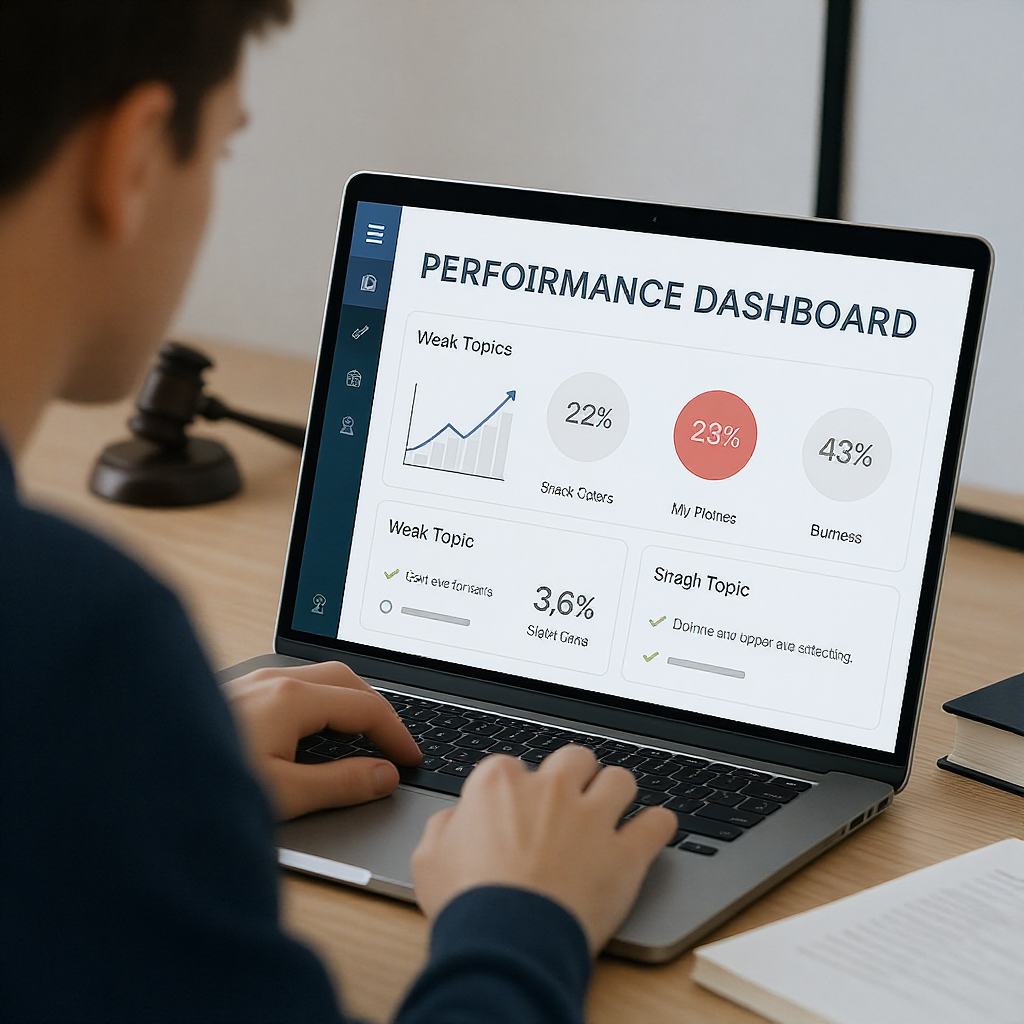
Take weak-topic analysis, for instance. Platforms like SQE1Prep use performance data to pinpoint which legal topics you’re consistently missing. Did you bomb the last set of ethics questions? Struggling with remedies in contract law? The system knows and adjusts your focus accordingly. No more wasting time on areas where you’re already scoring 80%.
Why Most Candidates Fail Without Analytics
Here’s a scenario we see all the time: someone spends weeks doing random MCQs. They think, "Practice makes perfect, right?" Wrong. Random practice doesn’t target your weaknesses. In fact, it often reinforces bad habits. You get questions wrong, move on, and never actually fix the underlying problem.
In our experience, candidates who don’t use analytics tools often fall into two traps:
- Overconfidence in Strong Areas: You spend hours reviewing topics you already understand because they’re "comfortable."
- Avoiding Weak Areas: You subconsciously ignore topics you find hard because they’re frustrating.
Both are a recipe for failure. Weak-topic analysis fixes this by forcing you to confront your problem areas head-on. It’s uncomfortable, sure. But it’s the fastest way to improve.
A Real Example: How Weak-Topic Analysis Works
Let’s break it down with a practical example. Say you’re using SQE1Prep, a platform designed specifically for SQE1 candidates. Here’s how it works:
- Step 1: Take a Diagnostic Test: Start with a timed practice test. The system records your performance on every question.
- Step 2: Analyze the Data: The platform identifies which topics you got wrong most often. For example, maybe you scored 50% on "Trusts" but 90% on "Criminal Litigation."
- Step 3: Personalised Drills: The system generates targeted drills focusing only on "Trusts." You practice until your score improves.
This approach isn’t just theoretical. A 2023 survey by the SRA found that candidates who used weak-topic analysis tools were 40% more likely to pass the SQE1 on their first attempt Source. It’s not about working harder; it’s about working smarter.
The ROI of Using Analytics
You might be thinking, "Do I really need all this? Can’t I just study harder?" Sure, you could spend 300 hours trying to brute-force your way through the syllabus. But why would you, when analytics can cut that time in half? Candidates who use systems like SQE1Prep often report spending 20-30% less time on revision while scoring higher in their mocks. That’s time you can spend on other priorities — like your actual job or family.
And it’s not just about passing. Weak-topic analysis builds confidence. Knowing you’ve systematically addressed your gaps means you walk into the exam without second-guessing yourself. That’s priceless.
What If You Don’t Like Data?
Some candidates tell us, "I’m not a numbers person." Fair enough. But the beauty of tools like SQE1Prep is that they do the heavy lifting for you. You don’t need to analyze spreadsheets or calculate percentages. The system gives you the insights in plain English: "You’re weak in property law. Focus here." Simple, actionable, and effective.
If you’re still skeptical, check out our guide on FLK1 Essentials: Why Weak Topic Analysis Can Save Your SQE1 Prep. It’s a deep dive into why this strategy works and how to apply it to your own study plan.
Final Thoughts: Don’t Wing It
The SQE1 isn’t something you can cram for. It’s too broad, too nuanced, and frankly, too important to leave to chance. Data analytics takes the guesswork out of prep. Whether you use SQE1Prep or another platform, the principle is the same: find your weak spots, fix them, and focus on what matters.
Because at the end of the day, passing the SQE1 isn’t about how much you study. It’s about how smartly you study.
For more actionable tips, check out our post on 5 Time-Saving Strategies for SQE1 Success (That Actually Work). And if you’re ready to start pinpointing your weak areas, SQE1Prep has everything you need — from diagnostic tests to personalised drills.
Ready to see SQE1Prep in action?
AI-powered SQE1 exam preparation platform with focused MCQ drills, real-time analytics, weak-topic detection, and an AI tutor — from just £5/month.
Get Started Free →Learn more at SQE1 Drills