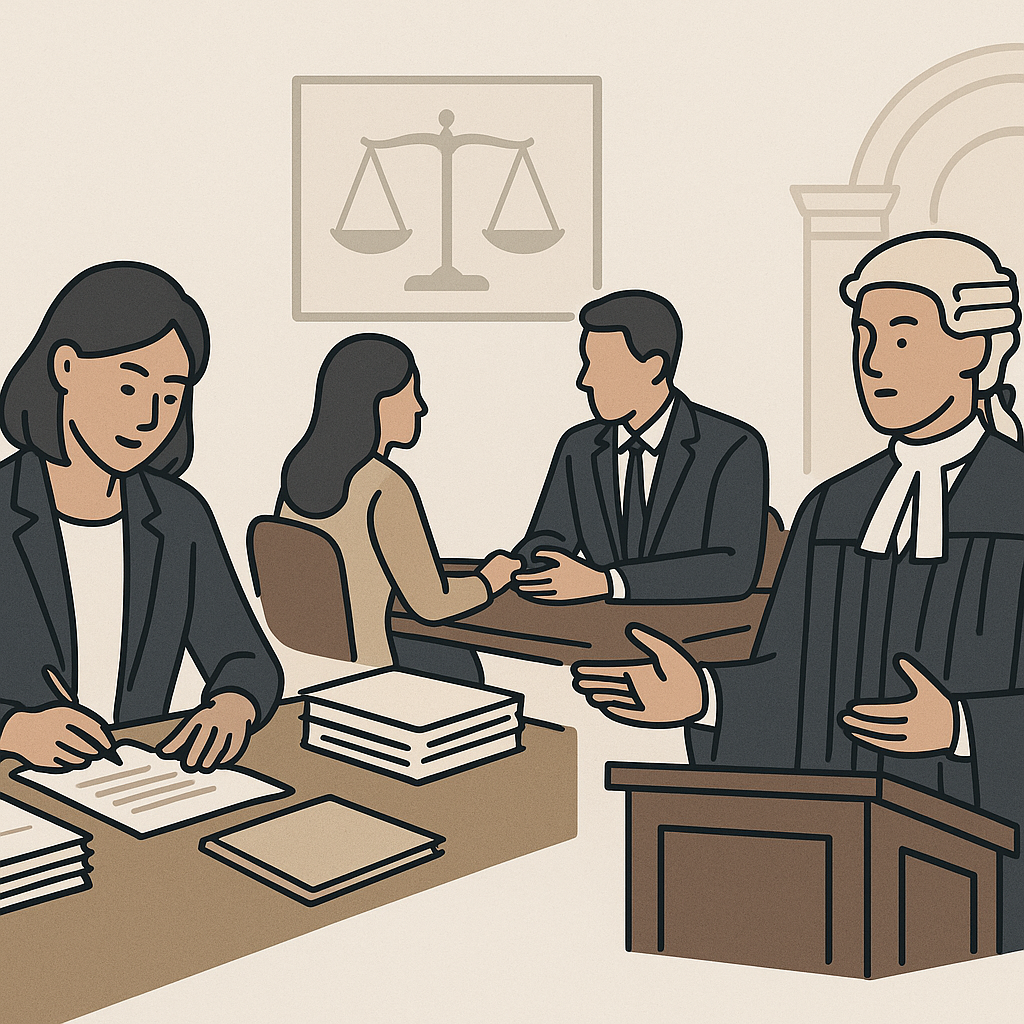
Paralegal vs Solicitor vs Barrister: Key Differences for SQE1 Candidates
If you're navigating the legal profession in England and Wales, you've likely asked yourself: what's the difference between a paralegal, a solicitor, and a barrister? More importantly, how does the SQE1 fit into this picture? Let’s break it down in practical terms.
The Role Breakdown: What Each Does
Paralegals: The Backbone of Legal Teams
Paralegals are the unsung heroes in law firms. They handle case prep, draft documents, and manage client correspondence. While they don’t have the same rights of audience in court as solicitors or barristers, paralegals are crucial in keeping cases moving.
Here’s the catch: the term “paralegal” isn’t regulated. Anyone doing legal work without being qualified as a solicitor or barrister could be called one. That means the role varies widely—from administrative tasks to responsibilities that overlap heavily with junior solicitors.
Solicitors: The Client-Facing Problem Solvers
Solicitors are qualified legal professionals who deal directly with clients. They prepare documents, negotiate transactions, and provide legal advice. Unlike barristers, they generally don’t appear in higher courts but often instruct barristers to represent clients in complex cases.
The SQE route has made becoming a solicitor more accessible—though not easier. Passing SQE1 and SQE2 is just the start. You’ll also need two years of Qualifying Work Experience (QWE). Paralegal experience often counts, making it a stepping stone to qualification.
Barristers: The Advocates
Barristers are courtroom specialists. They represent clients in court, draft legal opinions, and provide specialist advice. Unlike solicitors, they work independently, often instructed by solicitors on behalf of clients. Becoming a barrister involves passing the Bar Training Course (BTC) and securing pupillage—a process that remains highly competitive.
How SQE1 Fits Into Career Transitions
For paralegals aiming to become solicitors, the SQE1 is the first big hurdle. It tests your knowledge of legal principles and their application. If you’re coming from a paralegal role, you might already have practical experience in some of these areas. But here’s the problem: practical experience doesn’t always translate into exam success.
Why? Because SQE1 is a multiple-choice exam that’s all about active recall—not just recognising the law but understanding and applying it in single-best-answer scenarios. This is where many self-funding candidates struggle. Without the right practice, it’s easy to get stuck in a cycle of re-reading textbooks without actually improving.
Salary Expectations: Worth the Transition?
One of the biggest motivators for paralegals to qualify as solicitors is the pay bump.
- Paralegals: Salaries can vary widely depending on location and firm size. London-based paralegals in top firms might earn more, but the ceiling is usually lower than that of solicitors.
- Solicitors: Newly qualified (NQ) solicitors often see a significant jump in salary. Regional firms may offer less than large city firms, which can pay significantly more.
- Barristers: The pay here is highly variable. Junior barristers can earn very little during their early years, especially in fields like criminal law. However, experienced barristers in corporate or commercial law can earn substantial amounts annually.
Is the jump from paralegal to solicitor worth it financially? For most, yes. But it’s not just about the money. Qualifying opens doors to more complex, challenging work and the chance to advance within the profession.
Common Myths About Career Progression
Myth 1: You Have to Start as a Paralegal
False. While many solicitors begin as paralegals, it’s not a requirement. Some candidates move straight from university or a Graduate Diploma in Law (GDL) to the SQE route.
Myth 2: Barristers Earn More Than Solicitors
Not always. While top barristers in commercial or corporate law can earn millions, junior barristers often struggle financially. Solicitors in high-paying firms can out-earn many barristers, especially in the early years.
Myth 3: SQE1 Is Easier Than the LPC
Easier? Not quite. The SQE1 has streamlined the qualification process, but the multiple-choice format is deceptively tough. It’s designed to assess application, not just memorisation. That’s why consistent, targeted practice is essential.
How to Tackle SQE1 as a Paralegal
If you’re a paralegal looking to qualify as a solicitor, here’s a practical plan:
- Audit Your Knowledge: Identify gaps in your understanding of key legal subjects.
- Set a Study Schedule: Aim for daily, consistent practice. Even short, focused sessions can make a difference.
- Simulate Exam Conditions: Use timed mock exams to replicate the pressure of the real SQE1. This will help you build stamina and learn time management.
- Focus on High-Yield Topics: Prioritise areas that are commonly tested in SQE1.
- Track Your Progress: Monitor your improvement over time to ensure steady progress.
FAQ
1. Can I switch from paralegal to solicitor without the SQE?
No. To become a solicitor, you must pass both SQE1 and SQE2 and complete two years of QWE.
2. Can paralegal work count towards QWE?
Yes, but your supervisor must confirm that the work you’re doing meets the SRA’s requirements for QWE.
3. Is SQE1 useful for barristers?
Not directly. Barristers follow a separate qualification route. But the legal knowledge tested in SQE1 overlaps with what barristers need to know, so it can still be a helpful foundation.
4. How many hours should I study for SQE1?
This depends on your starting point. Candidates with relevant experience may need less time, while career changers may require more.
Wrap-Up
Understanding the differences between paralegals, solicitors, and barristers is crucial for navigating your career path. Whether you’re transitioning from a paralegal role or starting fresh, the SQE1 is a key step to becoming a solicitor. Preparing systematically and focusing on active recall can make a significant difference in your success.
Learn more at SQE1 Drills