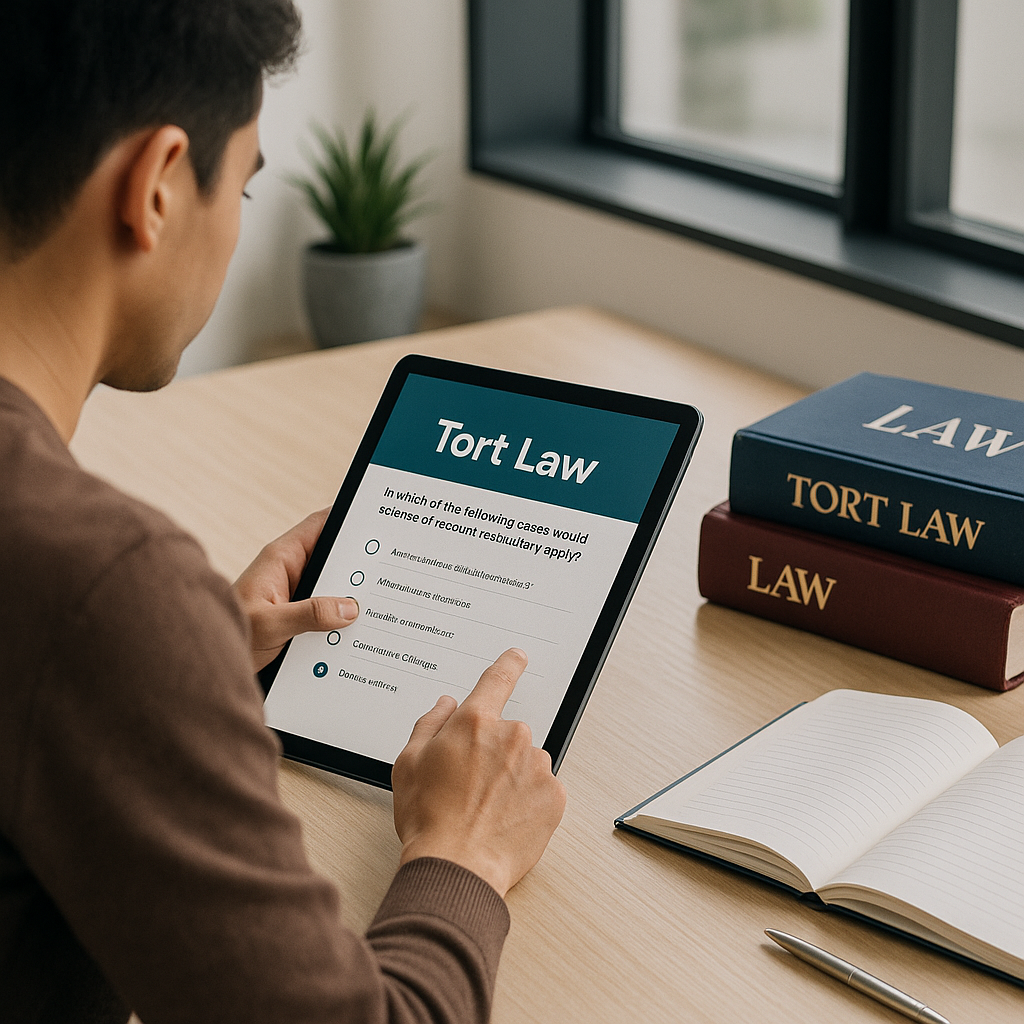
Are You Studying Wrong for SQE1?
If you're a paralegal working full-time while prepping for SQE1, you’re probably strapped for time and cash. You can’t afford to spend hours revising Contract Law again if you already know the basics inside out. But how do you figure out what to focus on?
That’s where weak-topic detection comes in. It’s not just a buzzword—it’s a lifeline for time-poor candidates. Most of us aren’t great at self-assessment. We tend to overestimate our strengths and underestimate our weaknesses. (Ever thought, I know Tort Law pretty well—only to crash and burn on a mock test?)
Weak-topic detection tools analyze your performance in real-time, flagging areas where you’re scoring below a certain threshold—say, 60%. Instead of wasting time on subjects you’re already good at, you can zero in on the ones that actually need work. Focused revision, better results.
Why Paralegals Love This Feature
Let’s be honest. As a paralegal, your day is already packed. Between drafting documents, attending client meetings, and managing deadlines, squeezing in study time feels impossible. You need every minute to count.
Take Isobel Brock, a paralegal from Leeds who signed up for SQE1 Drills. In her first week, she used weak-topic detection to identify that she consistently scored below 50% on Solicitors Accounts—a subject she hadn’t touched since her CILEx days. By focusing her drills on that weak area, she improved her accuracy to 73% in just three weeks. Her confidence? Through the roof.
Another example is James Patel, a career changer working as a legal secretary. He initially spread his 15-hour-a-week study time evenly across all subjects. But after using weak-topic detection, he realized he was nailing Ethics but struggling with Criminal Litigation. By reallocating his time, he boosted his overall mock exam score from 48% to 67% in a month.
Weak-topic detection isn’t just efficient—it’s motivating. Seeing tangible progress in your weakest areas builds momentum. Momentum gets you through those 80-hour work weeks and keeps you on track toward your goal.
The Problem With Traditional SQE Prep
Most traditional SQE prep courses (we’re looking at you, BARBRI and ULaw) are lecture-heavy. They’re great for theory but light on active recall—the exact skill you need to pass SQE1’s multiple-choice format. Worse, they often don’t provide granular insights into your performance. You finish a mock exam with a score, but no idea which subtopics dragged you down.
That’s a problem. SQE1 isn’t just about knowing the law; it’s about applying it under pressure. If you’re consistently scoring 80% on Business Law but 40% on Land Law, you’re setting yourself up for failure by ignoring the latter. And yet, most prep courses don’t tell you this.
Let’s look at two hypothetical candidates:
| Candidate | Approach | Result |
|---|---|---|
| Emily | Studied all topics equally, regardless of performance. | Passed Contract Law but failed Criminal Litigation, scoring 48% overall. |
| Sarah | Focused 70% of her time on weak areas flagged by weak-topic detection. | Improved weak areas and scored 72% overall, passing SQE1. |
The difference? Sarah worked smarter, not harder. Traditional courses often leave students like Emily in the dark, forcing them into inefficient study practices.
How SQE1 Drills Solves This
Here’s where SQE1 Drills flips the script. The platform’s real-time analytics flag weak topics automatically. Every MCQ you answer feeds into a dashboard that breaks down your accuracy by subject and subtopic. If your Wills & Administration scores dip below 60%, you’ll know—and the platform will suggest specific drills to fix it.
Step-by-Step: How to Use SQE1 Drills Effectively
-
Complete a Baseline Assessment: Start with a diagnostic test to pinpoint your strengths and weaknesses. This will save hours of aimless studying.
-
Review Your Dashboard: The platform categorizes your performance by subject and subtopic. For instance, you might see that while you’re scoring 75% on Family Law, your Children Act scores are hovering at 45%.
-
Focus Your Drills: Use the suggested drills to target weak areas. Each drill includes explanations for incorrect answers, reinforcing key concepts.
-
Track Your Progress: As you complete more drills, your dashboard updates in real-time. This ensures you’re always working on your most pressing weaknesses.
-
Repeat and Adjust: After a few weeks, take another practice test to reassess your weak areas. Rinse and repeat until your scores are consistently above 70%.
Real-World Outcomes
According to SQE1Prep’s blog on MCQ strategy, over 50% of SQE1 candidates fail because they don’t tailor their prep to their weak areas. Instead of drilling smarter, they drill harder—and burn out. Platforms like SQE1 Drills solve this problem by making your study time more efficient and targeted.
Why It’s Perfect for Self-Funding Candidates
Let’s talk money. The SQE route is supposed to democratize access to the legal profession, but the reality is different. Traditional prep courses cost £3,000-£6,000. Add exam fees (£1,622 for SQE1 and SQE2), and you’re looking at a qualification bill that matches a used car.
For self-funding paralegals, that’s a non-starter. You need affordable solutions that deliver real value.
Cost Comparison of Popular SQE Prep Options
| Prep Option | Cost | Features |
|---|---|---|
| BARBRI | £4,000+ | Comprehensive but expensive. |
| ULaw | £5,000+ | Includes workshops, very costly. |
| SQE1 Drills | £5/month | Targeted drills, real-time data. |
At £5/month, SQE1 Drills offers targeted practice without the fluff or the price tag. It’s ideal for candidates who are balancing work and study, and who can’t afford to waste time or money.
The Bigger Picture: Becoming a Solicitor Without Debt
The SRA’s SQE framework removes barriers like training contracts and expensive LPCs. But if prep costs are still sky-high, are those barriers really gone? Affordable platforms like SQE1 Drills are changing the game, making solicitor qualification genuinely accessible.
Paralegals are uniquely positioned to take advantage of this. You’re already gaining Qualifying Work Experience (QWE) on the job. Pair that with focused, affordable exam prep, and you’ve got a clear path to qualification—without breaking the bank.
FAQs
1. How does weak-topic detection work?
It analyzes your performance in real-time, highlighting subjects or subtopics where your accuracy consistently falls below a set benchmark. For example, it might flag that your accuracy on "Trusts Law" is 45%, suggesting it needs more attention.
2. Can weak-topic detection help with time management?
Yes. By focusing only on areas where you’re weak, you avoid wasting time on subjects you’ve already mastered. This targeted approach maximizes efficiency.
3. Is this feature available on other SQE prep platforms?
Some platforms offer performance tracking, but most don’t provide the granular weak-topic insights that SQE1 Drills does. This makes SQE1 Drills a standout choice for targeted prep.
4. Is it worth £5/month?
If it saves you from failing SQE1 (and paying the £1,622 exam fee again), it’s worth every penny. Plus, the platform offers a free trial so you can test it before committing.
5. Can I try it before committing?
Yes. SQE1 Drills offers 10 free MCQs and a 30-day free trial. You can explore the platform and its features without any financial commitment.
Conclusion: Stop Guessing, Start Passing
If you’re still relying on guesswork to guide your SQE1 prep, it’s time to stop. Weak-topic detection isn’t a luxury; it’s essential. Whether you’re a paralegal, a career changer, or retaking SQE1 after a failed attempt, knowing where to focus is half the battle.
Want to see how it works? SQE1 Drills offers real-time analytics, targeted drills, and weak-topic detection—all for the price of a coffee. Try it free today.
Learn more at SQE1 Drills